

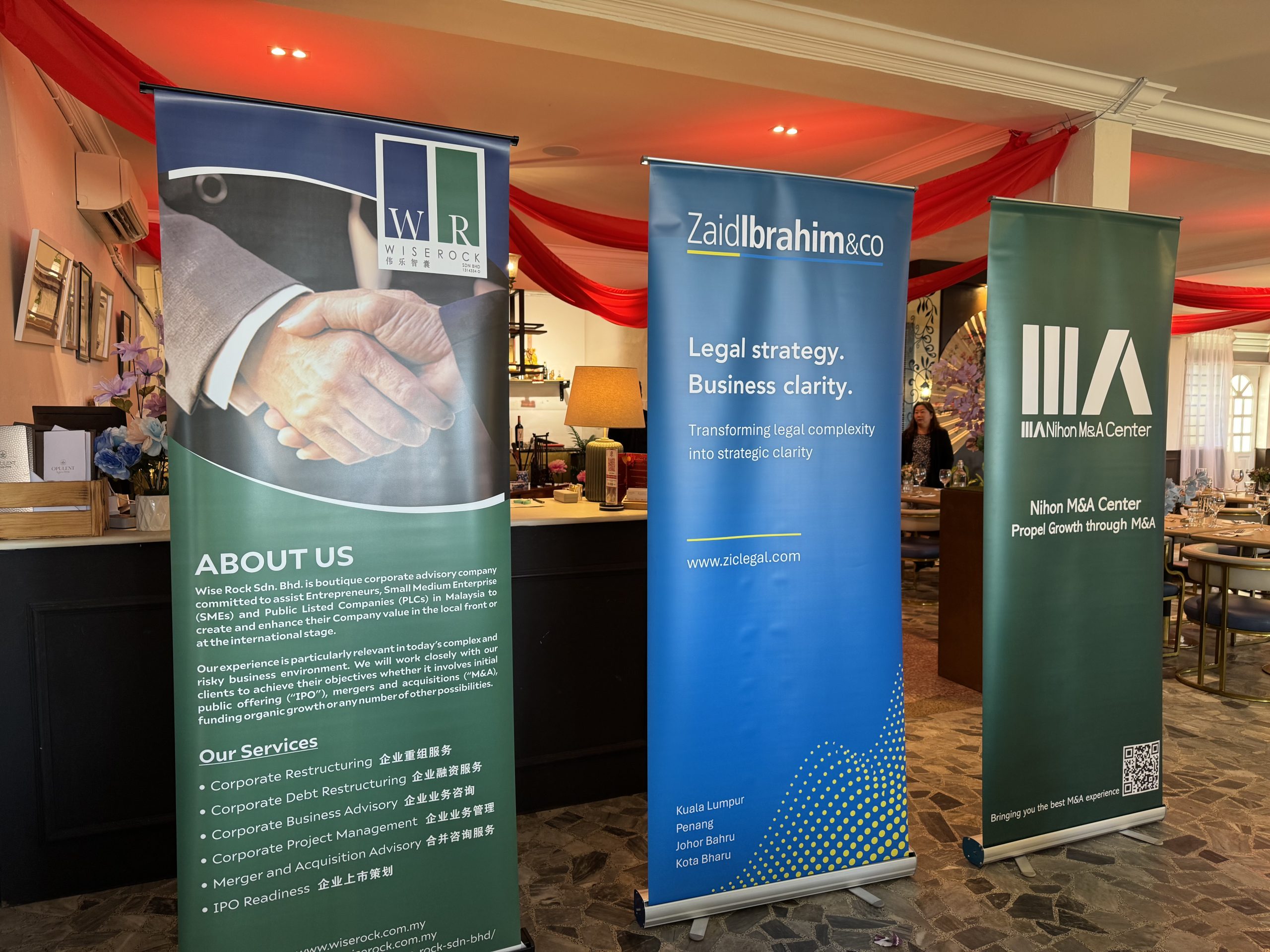
Nihon M&A Center Malaysia kicked off 2026 strong with our first workshop of the year in Penang on 28 January 2026. Co-organized together with our partners Wise Rock Sdn Bhd, a corporate advisory boutique firm, and Zaid Ibrahim & Co. (Penang), one of the top tier law firms in Malaysia, the session brought together over 20 SME business owners and senior leaders for an in-depth and practical exploration of how mergers and acquisitions (M&A) can support growth, continuity, and long-term value creation.
Titled “Building Lasting Business Value Through M&A,” the workshop was designed for SME owners who may not yet be familiar with M&A but are beginning to think more deliberately about the future of their businesses – whether in terms of succession, expansion, or building strategic options beyond organic growth. Rather than just focusing on transactions, the workshop aimed to introduce M&A as a strategic tool that can strengthen business resilience and future optionality when considered early.
A Multi-Perspective Look at M&A
To provide a practical and well-rounded understanding of M&A, we structured the workshop around three key perspectives – strategic, legal, and valuation. Each segment was delivered by experienced practitioners who work closely with business owners on real transactions, offering participants a holistic view of the M&A journey.
1. M&A for Growth and Continuity: A Strategic & Cross-Border Perspective
The workshop opened with insights from our Regional Head for Southeast Asia at Nihon M&A Center, Mr. Yusuke Ojima, who shared why M&A is becoming increasingly relevant today — not just as a deal, but as a practical way for business owners to think about growth, continuity, and the future of their companies.

Drawing from Japan’s experience, Mr. Yusuke spoke about how an ageing business-owner population, succession challenges, and a shrinking domestic market have pushed many Japanese companies to turn to M&A as a way to keep businesses going and competitive. With growth at home becoming harder, more Japanese companies are also looking beyond Japan, with Southeast Asia, especially Malaysia, standing out as a natural focus. He noted that similar issues are beginning to surface among Malaysian SMEs, particularly founder-led businesses starting to think about the next generation. For many owners, M&A is no longer just an “exit” option, but a realistic way to pass on the business, strengthen operations, and set the company up for its next phase of growth.
In this context, the interests of Japanese strategic buyers and Malaysian SMEs naturally align. Japanese companies are looking for stable, well-run businesses they can grow over the long term, while Malaysian owners can use M&A as a way to transition ownership while preserving what they have built, for example, their teams, their culture, and their legacy. Beyond capital, such partnerships can also bring operational know-how, better management practices, stronger governance, and access to wider regional or global networks.
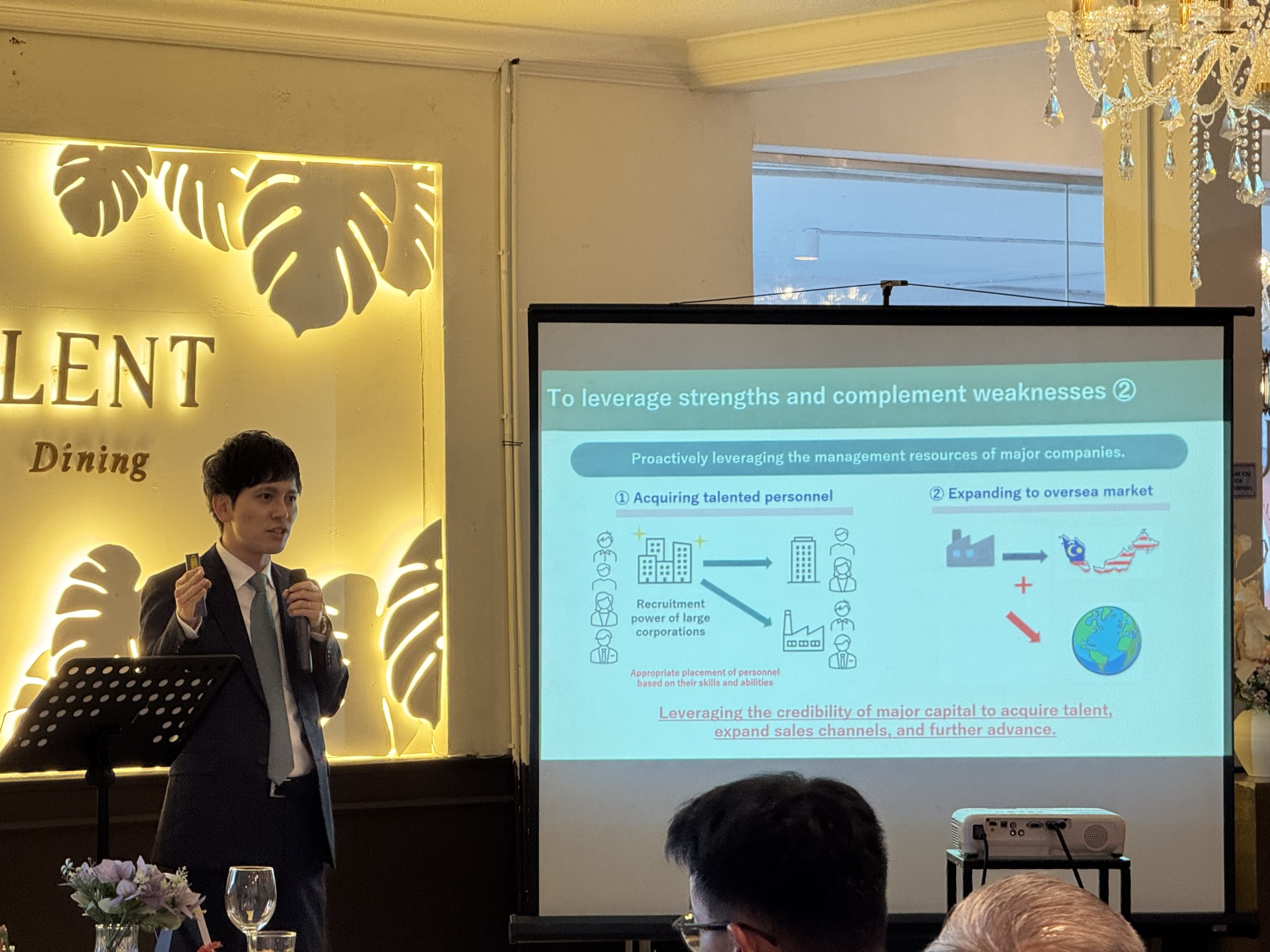
Mr. Yusuke also highlighted what Japanese buyers typically look for when assessing Malaysian businesses, including management depth, clear decision-making structures, governance standards, documentation quality, and long-term sustainability – all of which that often determine whether a transaction can progress successfully.
Overall, this strategic overview helped participants better understand why M&A is becoming increasingly relevant for many SMEs today, why cross-border interest from Japan continues to grow, and how local SMEs can position themselves more effectively for future opportunities.
2. Understanding the M&A Process and Transaction Readiness: The Legal Perspective
Building on the strategic discussion, the workshop then moved into the legal aspects of M&A, led by Mr. Ang Siak Keng, Partner at Zaid Ibrahim & Co. and Head of its Penang Office.
Mr. Ang walked participants through the typical lifecycle of an M&A transaction, from initial discussions and indicative offers to due diligence, documentation, regulatory approvals, and finally completion. The session helped demystify the process and gave participants a more realistic sense of the time, structure, and complexity involved.
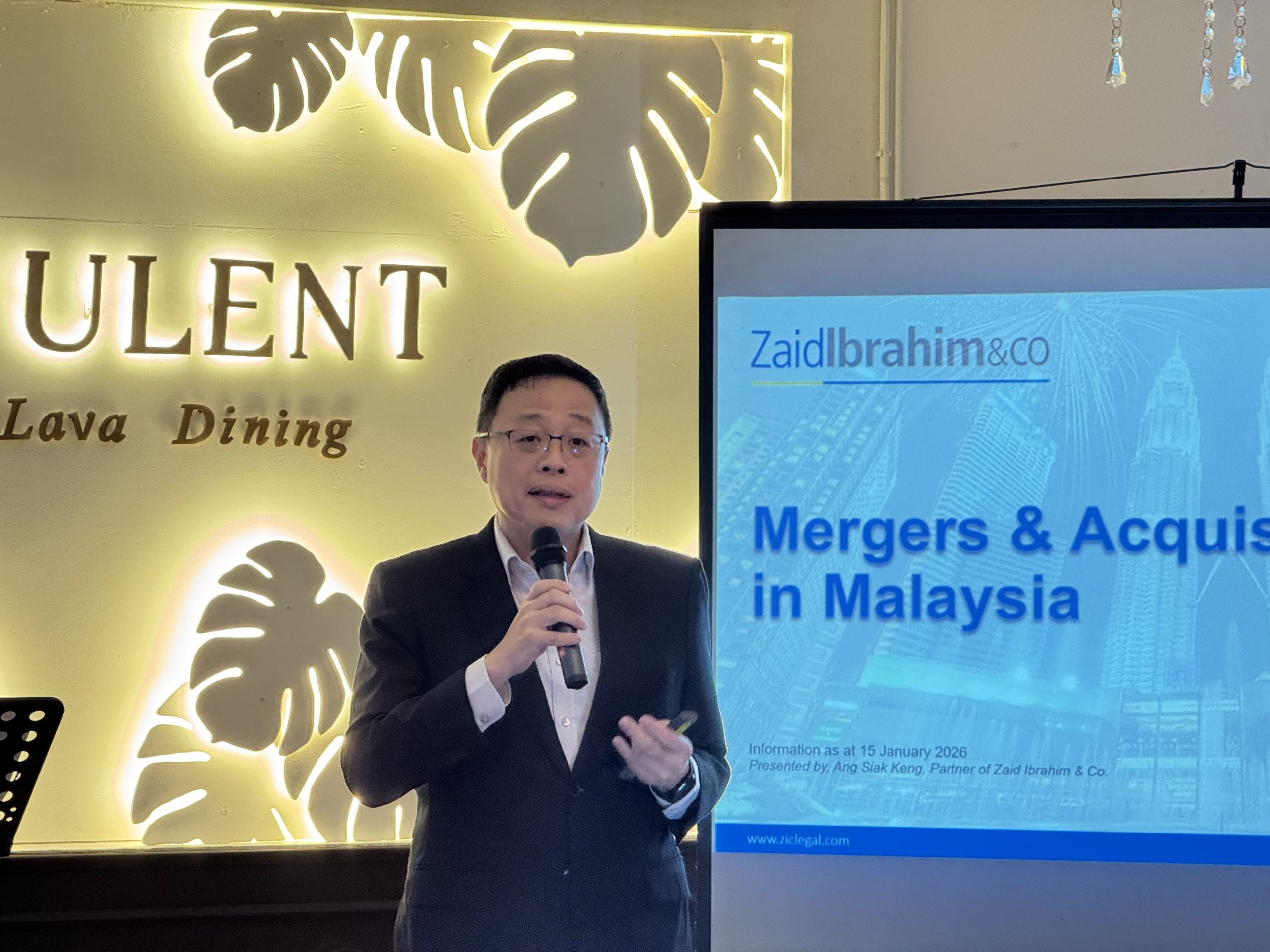
A key part of the discussion focused on was legal due diligence and why it matters. Mr. Ang clearly explained how due diligence helps surface risks, confirm key assumptions, and support better decision-making. He also outlined the common legal due diligence areas buyers usually review, including corporate structure, shareholder arrangements, material contracts, regulatory compliance, employment matters, and potential liabilities.
He further highlighted the importance of proper documentation, explaining how incomplete or inconsistent records can lead to delays, renegotiations, or increased transaction risk. Common legal pitfalls were highlighted, including underestimating preparation time, unclear shareholder decision-making authority, and misconceptions around regulatory approvals.
The session, again, reinforced that legal readiness is less about rushing into a deal and more about being prepared early. Good legal housekeeping can make a meaningful difference to deal efficiency and outcomes.
3. Business Valuation: What Really Drives Value
The final segment focused on business valuation and was delivered by Mr. Seng Choy Lum, Managing Director of NX Advisory Sdn. Bhd. (representing Wise Rock Sdn. Bhd.). Mr. Lum provided a practical, buyer-focused view of how businesses are typically valued in an M&A context, helping participants understand how buyers think beyond headline figures.
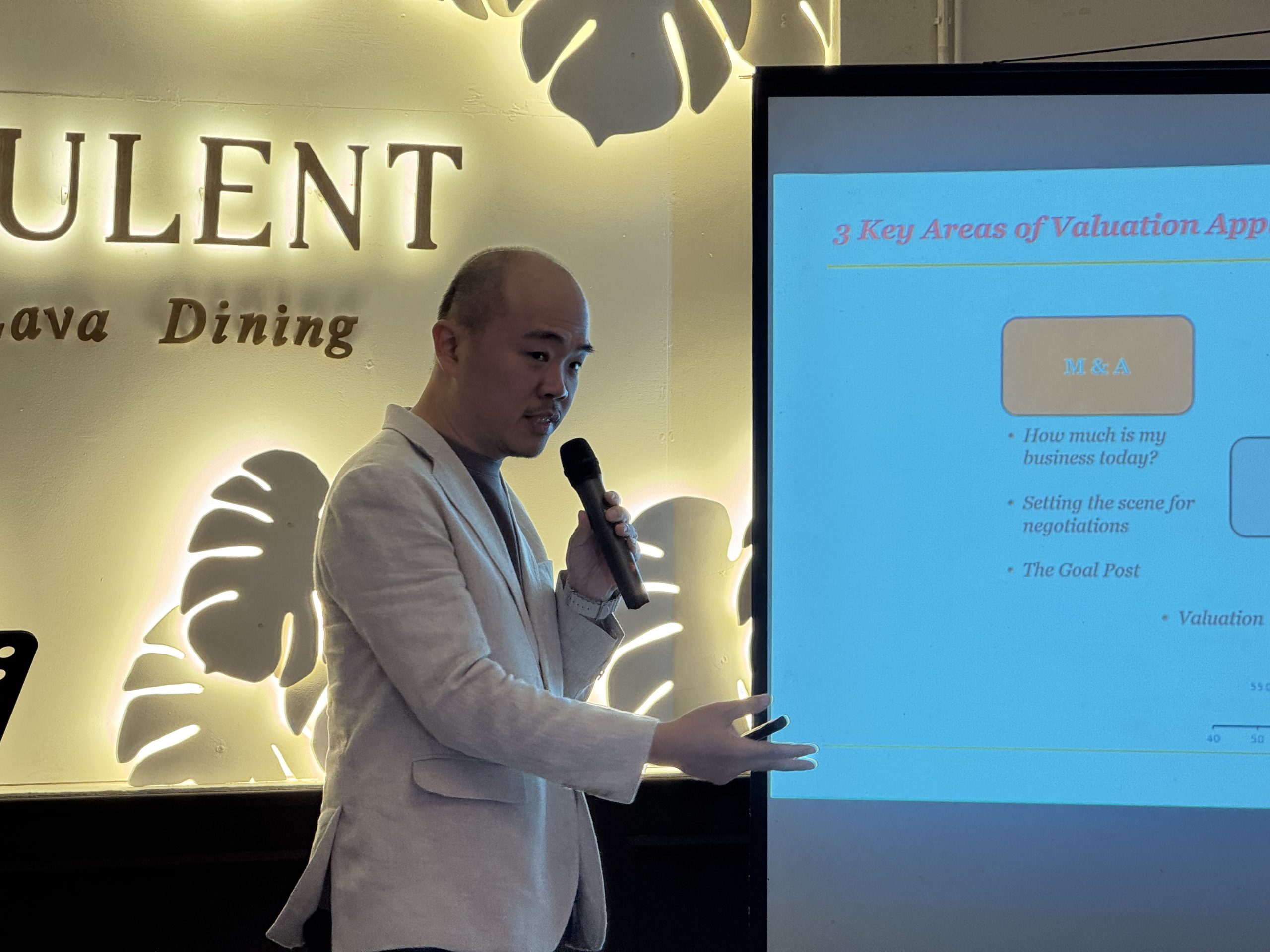
He walked through key valuation concepts such as maintainable EBITDA, quality of earnings, enterprise value versus equity value, and how factors like debt levels and cash-flow sustainability can materially affect valuation outcomes. Importantly, Mr. Lum emphasised that valuation is not based on a single year’s performance, but on the ability of the business to deliver stable and sustainable earnings over time.
Mr. Lum also addressed common valuation misconceptions among SME owners, highlighting how issues such as inconsistent financials, aggressive adjustments, or poor documentation can erode value, even for otherwise strong businesses. He explained that financial transparency, consistency, and clear record-keeping often influence valuation well before formal negotiations begin.
By the end of the session, participants had a clearer picture of why valuation is not just about “how big the numbers are,” but about how well the business is run, how sustainable it is, and how clearly its story can be understood by a buyer.
Bringing the Perspectives Together
Taken together, the strategic, legal, and valuation discussions all pointed to one ultimate theme of the workshop – M&A readiness does not start when a deal appears, it starts much earlier. By seeing M&A as a long-term strategy, getting legal and corporate structures in order, and maintaining financial discipline, business owners are better positioned to approach future opportunities with greater clarity and confidence.
The interactive format allowed participants to engage directly with speakers across all three perspectives, grounding the discussions in real-world business situations rather than theory.
This workshop was made possible through close collaboration with our partners, and we at Nihon M&A Center always value the opportunity to learn and share alongside them. As we move through 2026, we look forward to working together with more like-minded partners on future knowledge-sharing sessions, as we continue supporting Malaysian business owners through growth, succession, and strategic decisions.
Interested in collaborating with Nihon M&A Center Malaysia? Let’s connect! We’re always happy to engage with like-minded partners.