

In our recent blog, we explored the six key types of due diligence that SME owners should understand when entering a mergers and acquisitions (M&A) process. That overview explained what buyers typically look for — from financials and legal documents to operations, people, and environmental matters. But knowing the categories alone is not enough to ensure a smooth due diligence experience. When SME owners actually step into the process, many quickly realize that due diligence is far more detailed, time-consuming, and demanding than they had expected.
This is completely normal. For many SME business owners, due diligence can sometimes feel intense because it is like putting the entire company under a microscope. Buyers, however, rely heavily on this stage because it helps them validate what they are buying, uncover risks early, and plan for integration after the M&A. When both sides approach due diligence with clarity and preparation, the process becomes smoother, fairer, and more transparent, but when one side is unprepared, especially on the seller side, that is when all the challenges can quickly emerge.
To help SME owners navigate this stage confidently, in this article, we will walk you through the most common challenges faced during due diligence and explain why they happen, what they mean for both buyer and seller, and how preparation can significantly improve the experience. We also share a simple, practical checklist at the end to help you organize the information buyers typically request.
Common Due Diligence Challenges That Slow Everything Down
Below are the most frequent challenges that appear during an M&A due diligence process. These issues are common among SMEs and, while not all of them will necessarily break a deal, they can create delays, raise concerns, or complicate negotiations if not addressed early. This is why preparation is essential for a smoother and more effective review.
1. Information Gaps and Inconsistencies
Due diligence requires a substantial amount of information and documentation about the business. For many SMEs, the biggest challenge is the lack of complete, accurate, and well-organized data. This becomes an issue because buyers rely on financial statements and supporting documents to understand the company’s true performance and assess whether the numbers presented are reliable. So, when accounts are not updated regularly, when monthly profit and loss breakdowns are missing, or when balance sheets are outdated, buyers may question the accuracy of the information. This often results in additional time spent reconciling figures and clarifying discrepancies — ultimately slowing down the entire due diligence timeline.
It is also common for SMEs to rely on verbal or informal agreements with customers, suppliers, or employees. While this may be convenient and work in daily operations, buyers require written contracts to assess risks and understand the precise terms of these relationships. Without proper documentation, sellers may need to recreate agreements or formalize terms during the review, which adds unnecessary delays and uncertainty.
In short, ensuring that information is prepared, accurate, and well-documented would greatly help keep the entire process moving smoothly.
2. Missing Corporate Records and Compliance Gaps
Another significant challenge arises when corporate records are incomplete or compliance-related documents are outdated. Legal due diligence is a critical part of the M&A process because it allows buyers to verify that the company is operating legally and meets regulatory requirements. This includes reviewing licenses, permits, shareholder agreements, human resources (HR) files, and other important corporate records. When these documents are missing or difficult to locate, buyers will need additional clarification, which prolongs the review. Hence why ensuring that all corporate records are updated, accessible, and properly organized helps avoid interruptions and strengthens the credibility of the business. It also reflects the professionalism and reduces concerns about hidden risks of the seller’s business.

3. Lack of Transparent Communication
Poor communication is one of the biggest reasons due diligence becomes stressful or delayed. This often happens when SME owners underestimate the importance of due diligence or the amount of time and effort required to support it. Gathering documents, explaining business processes, and responding to follow-up questions can be demanding, especially when owners or lean management teams are juggling daily operations at the same time. Additionally, some SME owners may believe certain information is “not important” or may feel hesitant or secretive about sharing details they consider sensitive. However, withholding or delaying information can create uncertainty, prompt more questions from buyers, and slow down the entire review. Buyers depend on clear communication to evaluate risks accurately. When responses are slow, incomplete, or unclear, they may interpret this as disorganization, or worse, a potential red flag about the business.
This is why having the right team and advisors is crucial. At Nihon M&A Center, our M&A professionals will guide business owners throughout the entire process, from helping organize key documents to anticipating buyer questions and providing clear, strategic explanations. We act as the bridge between both parties, ensuring communication remains transparent, fair, and aligned throughout.
4. Cultural misalignment
While cultural issues may not delay the administrative side of due diligence, they can slow down the buyer’s decision-making. Many SMEs depend heavily on the founder, who often holds key relationships and plays a central role in daily operations. Buyers therefore pay close attention to the company’s culture, leadership style, team dynamics, and employee mindset. Differences in expectations, communication styles, or values can create uncertainty about post-merger integration. If buyers sense heavy reliance on the owner, unclear roles among employees, or cultural incompatibilities, they may conduct additional interviews and assessments to evaluate people-related risks before proceeding. This adds time to the due diligence process and influences how comfortable buyers feel about moving forward. So, when sellers are open about team structure and culture, it helps set solid expectations and reduce surprises later.
Now that we have covered the challenges, the next step is preparation.
Understanding what buyers typically expect during due diligence, and getting these materials ready in advance, can make the entire process much smoother. While the checklist below is not exhaustive, as requirements may vary depending on the deal, it provides a strong starting point – highlighting the key documents and information buyers commonly request, helping SME owners prepare more constructively.
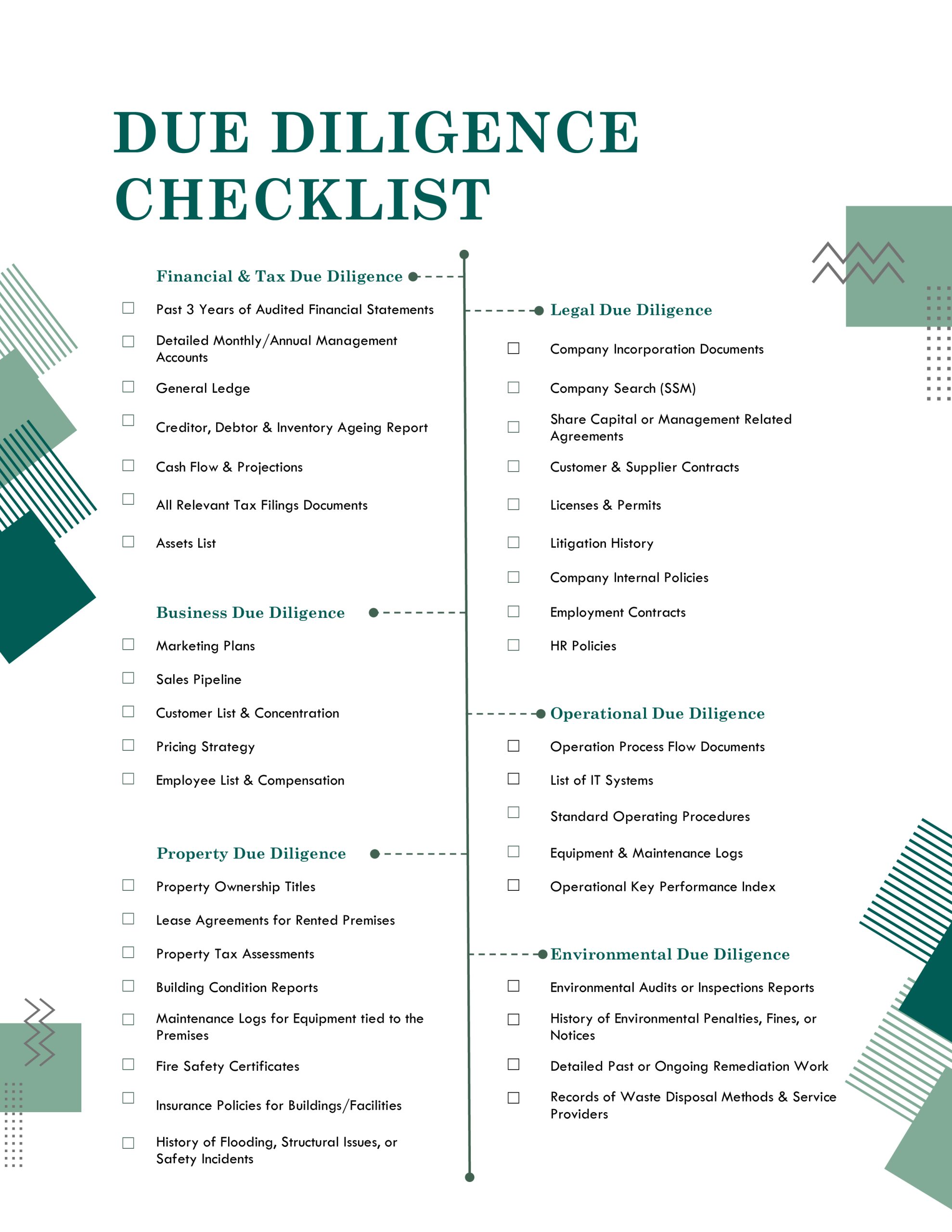
It is normal that due diligence can feel overwhelming, but it is ultimately a process designed to protect both buyers and sellers and ensure the M&A transaction moves forward with clarity and confidence. And the challenges often become much more manageable when both parties enter the process prepared and aligned. Understanding what buyers need, organizing documents early, and maintaining open communication can dramatically speed up the process and reduce stress for everyone involved.
Sometimes, what SMEs need is not the perfection – all they need is preparation and the right guidance. With the right advisory support from experienced professionals like Nihon M&A Center, the due diligence journey becomes much more efficient and less intimidating, ultimately increasing the chances of achieving a strong and successful deal outcome.
Reach out to Nihon M&A Center Malaysia today and let us support your M&A ambitions, with guidance and confidence.