
How can business owners build a stronger, more valuable, and more sustainable business?
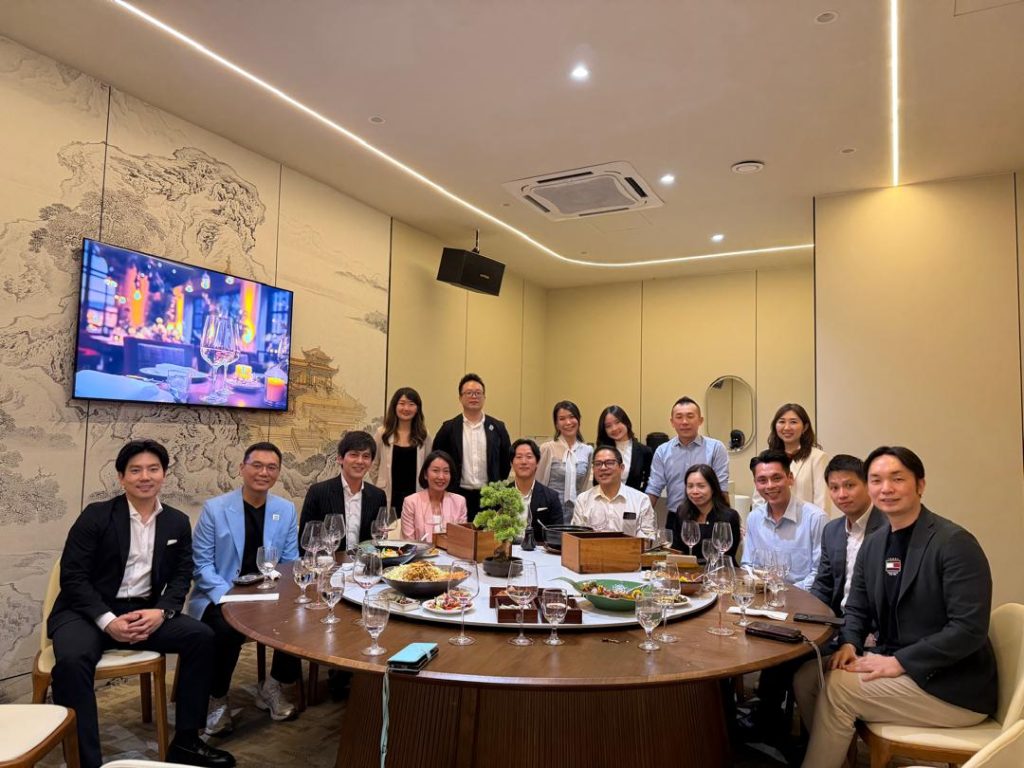
This was the central question explored at our recent workshop, “From Enterprise Value to Strategic Growth: Navigating Expansion & Succession through M&A,” jointly organized with our long-standing partner YYC, and Alliance Bank Malaysia Berhad.
The event brought together more than 60 SME owners, entrepreneurs, and business leaders for an afternoon of practical discussions on business growth, value creation, succession planning, and the strategic role of mergers and acquisitions (M&A).
As Malaysia’s SME landscape continues to evolve, business owners are increasingly exploring ways to strengthen their competitive position, prepare for leadership transitions, and unlock new growth opportunities. The workshop explored how enterprise value serves as the foundation for many strategic outcomes, from business expansion and succession planning to investment, partnerships, and M&A. By understanding what drives value and how to strengthen it over time, business owners can create more options and position their businesses for long-term success.
Bringing Together Multiple Perspectives on Business Growth
One of the key strengths of the session was the diversity of perspectives shared by the speakers. By bringing together experts from M&A advisory, corporate finance, and banking, participants gained a more holistic understanding of what drives long-term business value.
Understanding What Drives Enterprise Value
Opening the session, Sean Wan, Director from YYC Corporate Advisory explored a fundamental question faced by many business owners: What actually makes a business valuable?
His presentation focused on the key drivers of enterprise value and the practical steps business owners can take to strengthen their companies over time. Beyond financial performance, factors such as operational efficiency, growth potential, governance practices, and business sustainability all play a significant role in shaping a company’s value and attractiveness.
Sean also introduced participants to some of the common valuation methodologies used in M&A transactions, helping business owners better understand how buyers and investors assess the worth of a company. By gaining visibility into these valuation approaches, participants were able to appreciate how the decisions they make today can influence the value of their business and their attractiveness to potential buyers, investors, or strategic partners in the future.
Participants gained a deeper appreciation that business valuation is not merely an exercise conducted in preparation for a transaction. Rather, it serves as a reflection of a company’s overall health, resilience, and readiness for future opportunities. Whether the objective is growth, succession planning, attracting investors, or exploring M&A opportunities, understanding the drivers of enterprise value is often the first step towards creating more strategic options for the future.
From Enterprise Value to Strategic Growth Through M&A
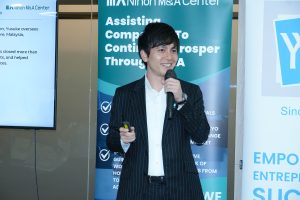
Building on this foundation, we have Yusuke Ojima, our Corporate Officer and Head of Overseas Division, shared how a strong and well-positioned business can leverage M&A as a strategic tool for growth, succession, and long-term value creation.
While M&A is commonly associated with business sales or exits, Ojima highlighted that it can also serve as a proactive strategy for expansion, capability-building, and business transformation. Through acquisitions, businesses can accelerate growth, enter new markets, strengthen their competitive position, and gain access to new customers, products, technologies, or talent. Companies that have built strong enterprise value are often better positioned to pursue such opportunities while also attracting the interest of investors, strategic partners, and potential acquirers.
The session also provided participants with insights from both the sell-side and buy-side perspectives. On the sell-side, business owners gained a better understanding of the qualities and characteristics buyers typically look for when evaluating acquisition opportunities. On the buy-side, Ojima shared how strategic acquisitions can help businesses overcome growth constraints, expand their capabilities, and create value beyond what may be achievable through organic growth alone.
This provided participants with a practical understanding of how business value and M&A strategy are closely interconnected, while highlighting the importance of preparing early rather than waiting until a transaction becomes imminent.
Ultimately, the discussion reinforced an important message: M&A is not simply about buying or selling a business. It is also about creating strategic options and empowering business owners with greater flexibility in pursuing growth, succession, partnership, or transition objectives.
Financing Growth and Building M&A Readiness
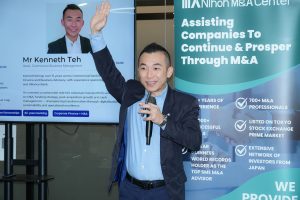

Rounding off the workshop, Beh Chin Boon, Head of Strategic Alliances & Partnerships, and Kenneth Teh, Head of Commercial Business Management, from Alliance Bank Malaysia shared how banking and financing solutions can support businesses as they pursue growth and value enhancement.
The speakers highlighted how access to financing enables businesses to invest in expansion opportunities, strengthen operations, and execute strategic initiatives that contribute to long-term enterprise value. They also discussed the growing importance of Environmental, Social and Governance (ESG) considerations, and how businesses that embrace sustainable practices may be better positioned to enhance resilience, strengthen stakeholder confidence, and improve overall M&A readiness.
Together, the session demonstrated that building a valuable business requires more than strong financial performance alone. It requires strategic planning, financial preparedness, and a long-term commitment to sustainable growth.
The Conversation That Resonated Most: Creating Business Value
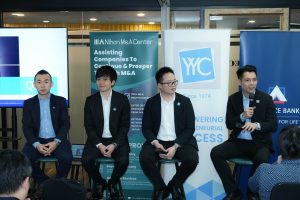
A particularly engaging segment of the workshop was the panel discussion and Q&A session, where participants actively shared their challenges and concerns.
Interestingly, many of the questions revolved around a common theme: value creation.
Business owners were keen to understand how they could maximize the value of their companies, what potential buyers look for when evaluating businesses, whether their businesses were ready for future investment or M&A opportunities, and how they could better prepare for succession or eventual exit.
The lively exchange reflected a growing awareness among SME owners that building a successful business is not only about generating revenue today, but also about creating a business that remains attractive, sustainable, and transferable in the future.
Building Strategic Options for the Future
One of the key takeaways from the workshop was that enterprise value should not be viewed solely through the lens of valuation or transactions.
Whether the objective is business expansion, succession planning, attracting investors, forming strategic partnerships, or pursuing M&A opportunities, these outcomes are often built on years of deliberate value creation. The decisions business owners make today, from strengthening operations and governance to investing in talent and sustainable growth, can significantly influence the opportunities available to them in the future.
By bringing together perspectives from corporate finance, M&A, and banking, the workshop demonstrated how enterprise value serves as the foundation for a wide range of strategic options. A stronger business is not only more attractive to investors, buyers, and partners, but also better positioned to navigate change, seize new opportunities, and sustain growth over the long term.
Ultimately, the workshop reinforced a simple but important message: building enterprise value is not just about preparing for a future transaction. It is about building a resilient business that gives owners greater flexibility, more strategic choices, and a stronger platform for future growth.